New chair, old guard
Brace for dissent.
July 24, 2026
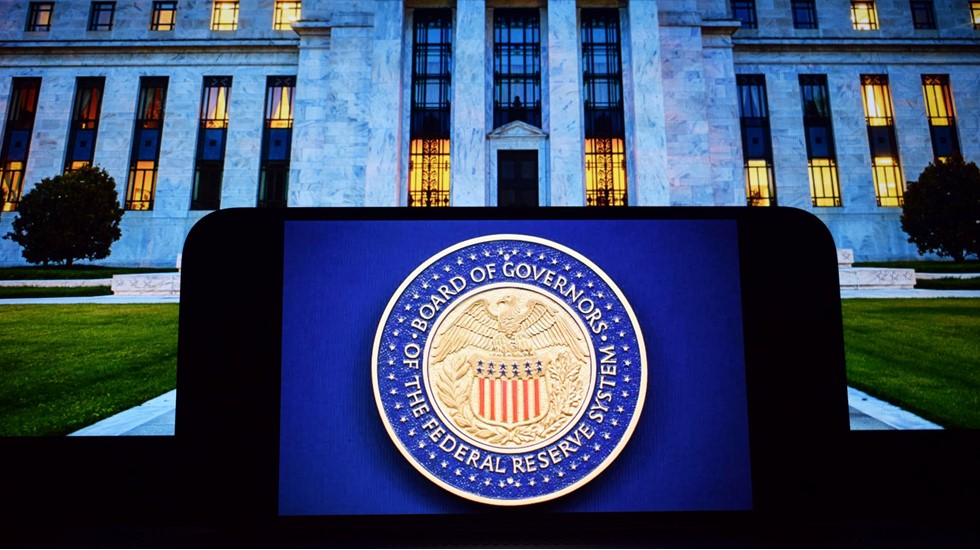
The Federal Open Market Committee (FOMC) – the policy setting arm of the Federal Reserve – is poised to splinter over its decision on rate hikes in July. The new chairman, Kevin Warsh, is expected to leverage the uncertainty surrounding the demand destruction associated with the war in Iran to hold the line in July.
The leadership of the Fed stood with him in June to underscore the Fed’s independence from political interference; that solidarity is fraying.
The core of inflation hawks among the Fed’s leadership has hardened and broadened in recent weeks, despite a more benign CPI than many expected in June. That data is backward looking.
The broader measure of inflation that the Fed targets – the personal consumption expenditures (PCE) index – is poised to look hotter and stickier. The data will be released the day after the meeting, but we have the inputs from the CPI, PPI and import prices; it looks hot and sticky.
Core PCE inflation, which excludes food and energy, is expected to come in at 3.3% in June, close to the 3.4% of May. That is still too hot for too long.
We expect two dissents this month if the Fed holds rates at the current 3.5% to 3.75% target. Presidents of the Cleveland and Dallas Fed are the most likely to dissent.
Cleveland Fed President Beth Hammack took the unusual step of writing a Linked-In post in defense of a rate hike last week. The post came out hours before the Fed went into its mandatory communications blackout period ahead of the July meeting.
That was intentional. She underscored that incoming data suggest inflation is broader-based than it had been and now poses a dilemma for households and employers alike.
Hammock concluded with the stress felt by consumers. Inflation is a regressive tax that hits those who can least afford it, the hardest.
The hawkish lean is not limited to the regional Fed presidents. Many on the Board of Governors, who will work closest with Warsh, have grown more hawkish. They are less likely to cast dissenting votes because they do not want to appear to undermine Warsh’s leadership so early in his tenure, especially given the political pressure that the Fed is facing.
Former Fed Chairman Paul Volcker resigned after the board sided against him in a vote on banking deregulation in 1987. That is one reason his successor, Alan Greenspan, focused so intently on curbing dissent and controlling the narrative coming out of the Fed.
Warsh would like to replicate Greenspan’s ambiguity in communications and curb speeches by other Fed officials. He won a small victory at his first meeting by issuing a shorter statement, with less explanation.
The statement removed the bias to cut rates, which received unanimous support even. He eliminated the alternative statements that the Fed’s staff typically produce; one is designed to accommodate a more dovish tenor; the other a more hawkish one. That was another victory as he would like to end forward guidance – statements about where rates are going next.
He would like to convince his colleagues to talk less about the direction of rates. That is a heavier lift and a difficult genie to put back in the bottle. It requires buy-in from his colleagues, which is why he announced task forces. They will debate everything from shifts in how the Fed communicates to the size of its bloated balance sheet.
Fed communications tend to be evolutionary rather than revolutionary, so I would not rule out stronger language on inflation this time. Warsh will not say the Fed wants to hike or cut, but many of his colleagues will.
More shocks, more price hikes
The war in Iran has increased the near-term risks to inflation and growth. The statement may contain stronger language on the persistence of inflation, but Warsh would want to stop short signaling a rate hike. It is unclear how much leeway his colleagues will give him, without triggering more dissent.
Another round of tariffs and increased enforcement at the border are coming up. The administration is attempting to recoup the revenues lost to the Supreme Court’s decision by levying other tariffs.
The new tariffs are slated to go into effect over the next several weeks, while recent research from the New York Fed reveals we have yet to feel the full effects from last year’s tariffs. Those changes and the decision to put the US-Mexico-Canada-agreement (USMCA) into an annual review process suggest even more tariffs.
New tariffs on Canada following wildfires cover alcohol, hockey sticks, cement and electronic components and machinery. They rely on an obscure law from 1930. They are still small but additive and will increase prices along with an executive order on June 3 to increase tariff enforcement at the border.
More worrisome are changes in the North American content rules for goods that cross the border tariff-free. The vehicle sector has a 75% North American content rule. The administration would like to change the US portion of that to 50% - meaning hundreds of billions in new costs if implemented overnight.
Usually shifts include a phase-in period, given the magnitude of such a disruption. Vehicle production in all three countries could suffer, given how many times parts cross the border before they roll off an assembly line as a finished vehicle.
Warsh is optimistic that AI will eventually boost productivity growth, which should help offset the upward march in inflation. The challenge is timing. The costs and wealth effects associated with AI are landing well before the innovation can be scaled to boost productivity beyond individual firms.
The new defense infrastructure, which is intertwined with the AI boom, is another factor. Increased defense spending at home and abroad will amplify that shock.
Why not “look through” supply shocks?
Warsh’s view on the benefits of AI are more bullish and hit sooner than those his colleagues. He does not set policy alone – it is set by committee. That is important, especially in light of the inflation we have already endured.
Everything from the supply shocks, fiscal and monetary stimuli, the AI boom, tariffs and war in Iran contributed to inflation. The latter has spillover effects that will affect some of the most important prices to consumers, including food.
The second order effects of supply shocks are even more worrisome to the Fed. The rise in wages that followed the initial surge in inflation is keeping service sector prices, which are more insulated from things like tariffs, elevated.
More stimulus
The biggest issues plaguing hawks are fiscal and monetary stimuli. Tax cuts resulted in a drop in withholdings at the start of 2026 and a surge in tax refunds. Those shifts and the rate cuts by the Fed in late 2024 and late 2025 helped buoy consumer demand, despite the spike in energy prices.
During the second quarter of this year, consumer spending accelerated at its fastest pace since the fourth quarter of 2024. That is adding to the demand due to data center construction and the need to replenish ordnance and weapons depleted by the wars in Iran and Ukraine. That is prior to restructuring defense infrastructure to incorporate AI, which amplifies the boost to costs associated with the AI boom.
We are more than five years into the post-pandemic inflation. Many factors caused the problem but only one institution is charged with correcting it – the Federal Reserve. Hawks on the Fed intend to do just that. We still expect two-rate hikes before year-end.
Treasury bond yields have already moved up in response to inflation. Lenders want to be compensated for inflation and the risk associated with lending long. That should further focus the Fed on derailing inflation sooner rather than later.
It is unclear how much leeway his colleagues will give him, without triggering dissent.
Diane Swonk
KPMG Chief Economist
Explore more


Subscribe to insights from KPMG Economics
KPMG Economics distributes a wide selection of insight and analysis to help businesses make informed decisions.
Meet our team